Due to the current situation, a few deliveries may experience delays. SHOP NOW
Your feet carry you through every step of the day, yet many people still wear shoes that don’t truly fit. Wearing the wrong shoes can cause pain, tiredness, and foot problems. Choosing the right footwear is not about trends alone; it’s about comfort, support, and knowing your own feet. Don’t Guess With Your Feet! Let’s have a closer look at understanding how to pick shoes that feel right.
Every foot is unique, and selecting the right shoe is all about matching your needs with the right fit. When your shoes fit properly, your feet feel better, your movement improves, and they protect you from common foot issues. Follow these simple steps to make sure of that.
Never rely on your old size; your foot size can change over time. It’s better to measure your feet before buying new shoes. Measure both feet while standing, since body weight can slightly spread the feet. If one foot is bigger, always choose the larger size for better comfort and balance.
Feet swell as the day goes on. If you shop early in the morning, shoes may feel fine at first, but become tight later. The best time to Try On shoes is in the late afternoon or evening. This helps prevent pinching, rubbing, or pressure when you wear the shoes for long hours.
Your toes need space to move freely. A tight toe box can cause blisters, corns, or painful pressure, especially for people with sensitive feet. Always check that there is about 1/2 an inch of space between your longest toe and the front of the shoe. Wide or deep toe boxes are ideal if you have bunions, wear orthotics, or stand for long periods.
Standing still isn’t enough to judge a shoe. Stroll around the store to see how it feels. Pay attention to slipping at the heel, pressure on the toes, or tightness on the sides. A well-fitting shoe should feel right the moment you wear it. If it doesn’t feel right at first, it won’t feel better after some time.
No two feet are the same, and shoe choice should match your foot structure. Flat feet need strong arch support and motion control to prevent strain. Wide feet should avoid narrow styles and choose brands offering wide sizes. Sensitive toes or bunions benefit from soft, stretchable uppers. People with diabetes should choose shoes with cushioned soles and smooth interiors to avoid pressure points and injuries.
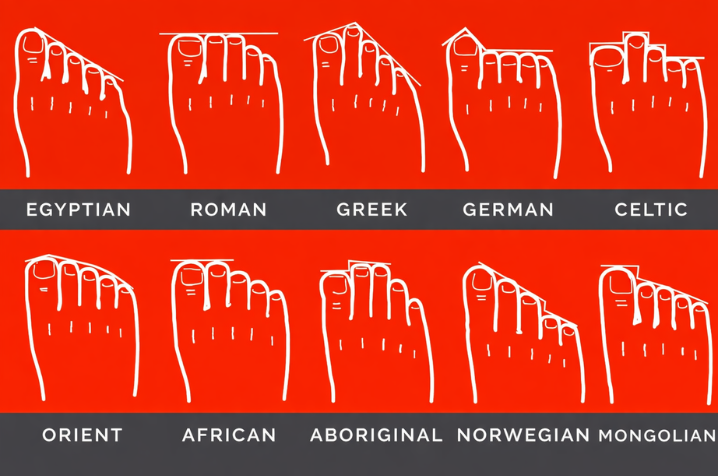
Egyptian foot: The big toe is the longest, and the other toes gradually get shorter in a straight line.
Roman foot: The first three toes are almost the same length, while the last two toes are shorter.
Greek foot: The second toe is longer than the big toe, giving the foot a slightly pointed look.
German foot: The big toe is the longest, and the other toes are close in length but slightly uneven.
Celtic foot: The big toe is long, the second toe is shorter, and the remaining toes vary in size.
Orient foot: The big toe is clearly the longest, and the other toes slope down sharply.
African foot: The first two toes are nearly the same length, with the rest gradually getting shorter.
Aboriginal foot: The big toe is dominant, and the other toes are short and closely grouped.
Norwegian foot: The big toe is long, and the toes decrease in length at a noticeable angle.
Mongolian foot: The big toe is the longest, and the remaining toes are much shorter and tightly spaced.
Normal Arch:- Has a balanced curve that spreads body weight evenly across the foot.
Flat Foot:- Has little to no visible arch, which often causes the foot to roll inward while walking.
High Arch:- It has a noticeable curve, placing extra pressure on the heel and the front of the foot.
When choosing footwear, focus on features that protect your feet and joints:
➣ Arch support helps in maintaining natural foot alignment and reduces strain
➣ Firm heel counter to stabilize the foot and prevent excessive movement
➣ Roomy toe space gives your toes enough room to move freely without pressure
➣ Soft cushioning makes shoes feel comfy, even if you wear them all day
➣ Shock absorption reduces the hard impact on your feet, knees, and legs when you walk or run.
➣ Secure fit that stays snug without slipping or squeezing.
Before making a purchase, run through this quick checklist to avoid mistakes:
➣ Proper fit that feels snug but never tight or loose
➣ Strong arch and heel support for better balance and posture
➣ Breathable materials like mesh or soft leather to reduce sweat
➣ Flexible sole that bends naturally at the toes
➣ Good traction to prevent slips and improve stability on different surfaces
If you want to experience shoes designed around natural foot movement, visit Gadz Sports. GADZ shoes are crafted with modern fashion and advanced footwear technology in mind. Each pair features high cushioning, strong traction, and REFLEX INSOLES made using custom orthotic techniques for better comfort, foot stretch, and support. GADZ is widely known as a trendsetter for Best Shoes in Dubai and across the UAE.